

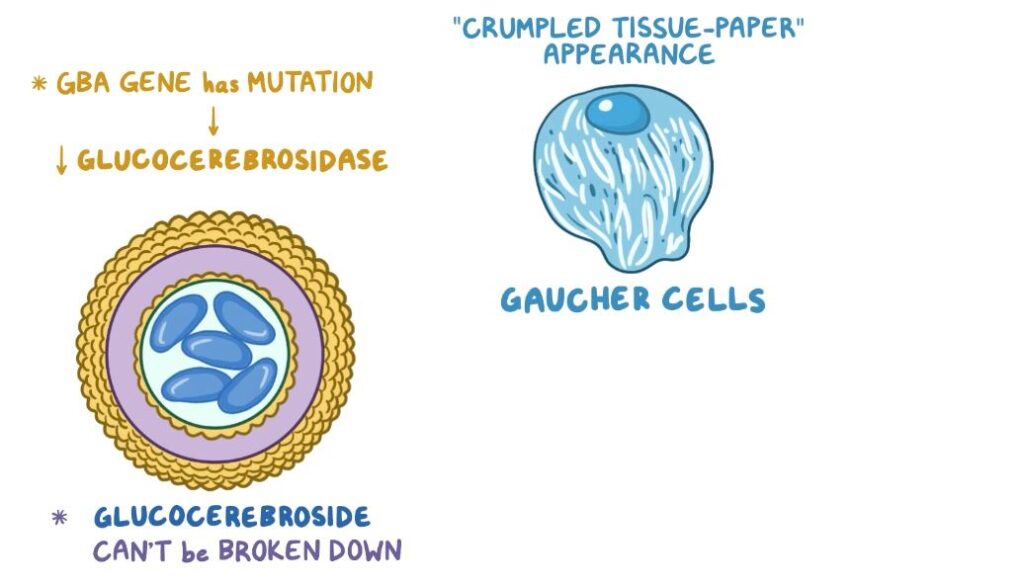
Despite being categorized as a rare genetic disorder, Gaucher disease affects a greater number of people than you might imagine. This disorder, which is more prevalent in Ashkenazi Jews, is caused by a single genetic mutation that interferes with the body’s ability to metabolize specific fats. This seemingly insignificant flaw eventually causes serious organ damage, persistent pain, and even neurological issues.
Gaucher Disease’s Science: A Genetic Mysteries
Fundamentally, Gaucher disease is brought on by a mutation in the GBA1 gene, which stops the body from making enough glucocerebrosidase, an enzyme that is essential for breaking down fats in cells. Without this enzyme, lipids build up in organs like the liver, spleen, and bone marrow, which causes health issues to worsen over time.
Understanding Gaucher Disease: Key Insights
| Category | Details |
|---|---|
| Scientific Name | Glucocerebrosidase Deficiency |
| Genetic Cause | Mutation in the GBA1 gene |
| Primary Symptoms | Organ enlargement, bone pain, anemia, bleeding disorders |
| Types | Type 1 (non-neuropathic), Type 2 (infantile, fatal), Type 3 (neurological complications) |
| Affected Organs | Spleen, liver, bone marrow, brain (Types 2 & 3) |
| Risk Factors | Ashkenazi Jewish ancestry, family history |
| Treatment Methods | Enzyme replacement therapy (ERT), substrate reduction therapy (SRT) |
| Is It Contagious? | No, it is a genetic condition |
| Prognosis | Type 1 is manageable with treatment, Type 2 is fatal, Type 3 varies in severity |
How Gaucher Disease Symptoms Change Over Time
Gaucher disease can go undiagnosed for years, in contrast to many genetic disorders. While some suffer from severe organ enlargement, bone crises, and potentially fatal complications, others only have mild symptoms like fatigue and bruises. Many cases are misdiagnosed or confused for other blood and bone disorders due to its variable progression.
The Three Types of Gaucher Disease: What You Need to Know
Gaucher disease is divided into three primary types, each with distinct characteristics and severity levels:
- Type 1: The most common and least severe form, affecting the liver, spleen, and bones but sparing the brain. With early intervention, patients can live normal, active lives.
- Type 2: A rare and severe form that manifests in infancy, leading to rapid neurological decline and early mortality.
- Type 3: A chronic neuronopathic form that affects both the body and brain, leading to progressive neurological impairment and lifelong disability.
Enzyme Replacement Therapy: A Revolution in Life Saving
Gaucher disease was thought to be incurable for many years, but developments in genetic medicine have altered that perception. With the help of enzyme replacement therapy (ERT), patients can now control their symptoms, lessen organ enlargement, and avoid serious complications. This treatment, which is administered intravenously, restores the deficient enzyme and aids in the breakdown of the body’s stored fat.
The Reality of Living With Gaucher Disease
Despite medical advancements, life with Gaucher disease remains challenging. Patients often struggle with:
- Unpredictable pain and fatigue that interfere with work and daily activities.
- Frequent hospital visits and expensive long-term treatments.
- Emotional and psychological stress due to the uncertainty of disease progression.
For those with Type 2 and severe Type 3, the impact is even more devastating, as neurological decline can severely limit independence and quality of life.
New Horizons: The Prospects for Treating Gaucher Disease
For people with Gaucher disease, recent advances in gene therapy have given them new hope. Researchers are looking into genetic editing methods that might be able to fix the malfunctioning GBA1 gene and provide a long-term remedy. Furthermore, JAK inhibitors and small-molecule treatments are demonstrating remarkable efficacy in mitigating symptoms and delaying the advancement of the illness.
Gaucher Disease Frequently Asked Questions
Does Gaucher disease cause death?
The type determines this. Type 2 is fatal in infancy, Type 3 has a variable prognosis, and Type 1 is treatable.
Is there a cure for Gaucher disease?
Although there is currently no cure, gene therapy and new medical advancements give great hope for the future.
How long does a person with Gaucher disease expect to live?
Patients with Type 1 diabetes can live long lives if they receive the right care. While Type 3 patients may live into adulthood with treatment, Type 2 patients typically die by the age of two.
How does one diagnose Gaucher disease?
Enzyme activity tests, genetic screening, and imaging scans to evaluate organ damage are used to confirm it.
Are there any lifestyle adjustments that can be beneficial?
Indeed, a healthy diet, consistent exercise, and stress reduction can significantly reduce symptoms and improve general health.